Interview: Team Ruberti – Mattéo et Frédéric
Interview en français ici
Mattéo (Arnas – Rhône, 2002) is a french triathlete that lives with autism, a reality that for a long time kept him at a distance from the outside world. Through the love, patience, and sporting experience of his father Frédéric (Roanne – Loire, 1974), a former professional cyclist and runner of more than 50 marathons (PB: 2h32), sport became far more than a training tool: it changed his life. Together, they pushed beyond limits many believed to be unreachable, and perhaps in the solitude of endurance sport, in those long, repetitive hours, Mattéo found what he needed most: calm, balance, and a sense of happiness.
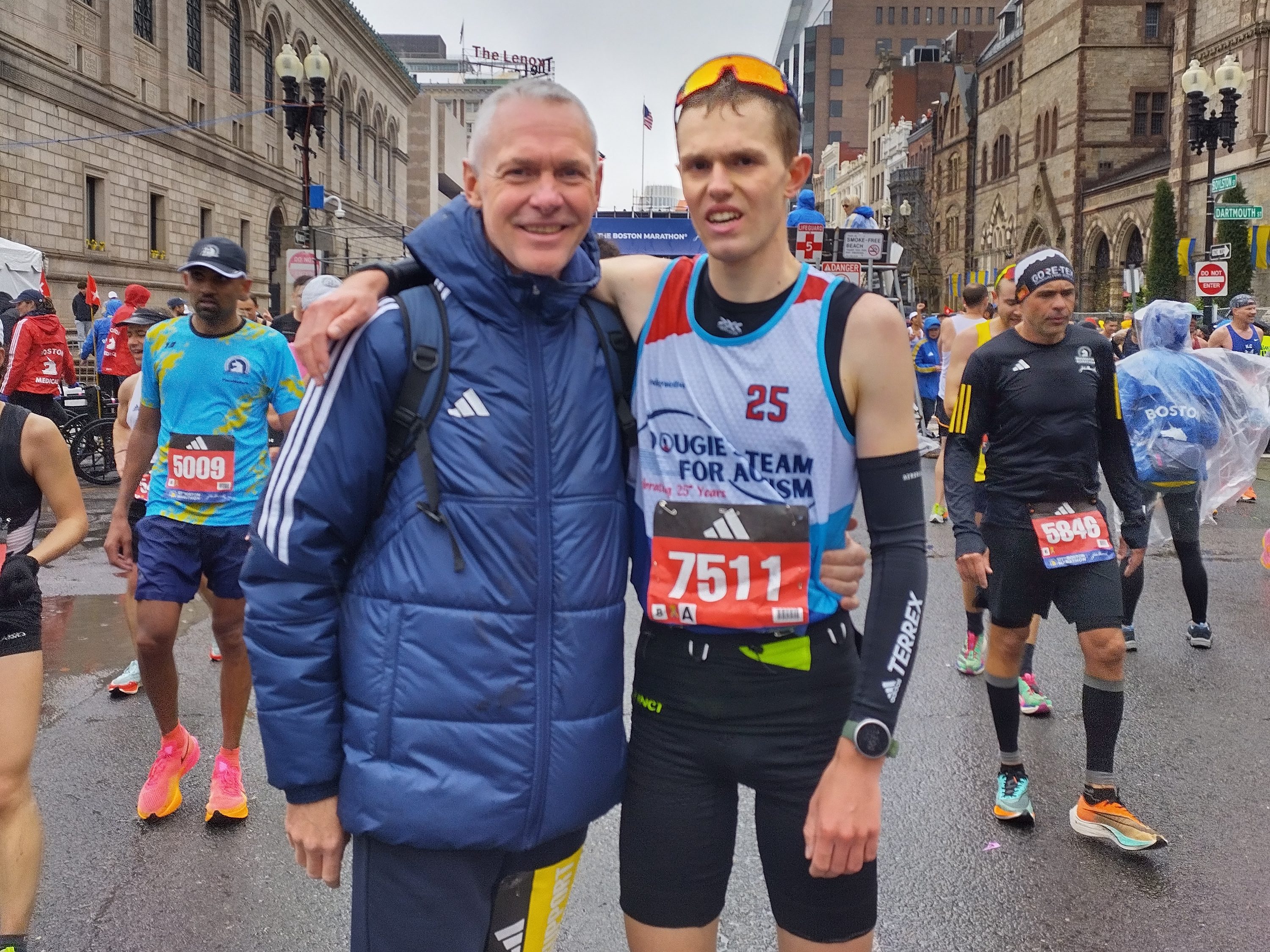
Mattéo and Frédéric… what does a typical day look like for Team Ruberti?
[Frédéric…] We’re up around 6am. While having breakfast together, I read and reply to messages on social media. Then, since Mattéo has a coach (Patrick Bringer) who sends a weekly program, I program his Polar watch for his running training, or I write his home-trainer workout down on paper using his own words. Sometimes I also map out a GPS route so he doesn’t get lost when his grandfather is following him by car.
I leave for work while Mattéo does his first training session of the day. At lunchtime, we eat together and I answer a few emails. In the afternoon, I go back to work while he does his second session. In the evening, I usually spend my time looking for sponsors and sending out applications, but sometimes I also have to take Mattéo to the pool for his third training session.
The days are very full and leave little room for anything else. Looking for partners takes up an enormous amount of my time. If I could find one major partner to secure his seasons, without constantly worrying about whether we’ll have the budget for this race or that one, it would be a huge relief.
Frédéric… So that we can fully understand the context of your story, what did a normal day at home look like when Mattéo was 12 years old?
A typical day for him was mostly staying in his room watching cartoons or playing video games. He wasn’t interested in much and stayed shut away in his room, only coming out to eat. I didn’t have many interactions with him, and that weighed on me. I wanted us to share something together, and that’s why I introduced him to tandem cycling.
Mattéo… What memories do you have of your childhood? Were you already into sport?
When I was very young, I didn’t do any sport. I didn’t like it. I tried cycling in a club, but I couldn’t ride on the road with other children because I was too scared. I was afraid of cars, of descents, of not being able to brake. I didn’t have much balance.
Even going down stairs was difficult. I had to go down sitting on my bottom or holding on to someone’s arm. When I was a kid, I would never have imagined doing what I’m doing now. When I look at who I’ve become, I tell myself that sport saved me.
Frédéric… When healthcare professionals suggested admitting Mattéo into an institute for people with intellectual disabilities, what went through your mind… and what made you say “no”?
At the school he was attending, they told me that for the following year there weren’t many other solutions than placing him in a special education school. They advised me to go and visit, so I did, to see what it was like. I visited several classrooms with students and I told myself: no, this isn’t possible.
If Mattéo goes in there, for me it would pull him down instead of lifting him up. So I said absolutely not. I had to keep him with me and try to open him up to others and help him progress. Even if some parents have no other choice but to go through a specialized institute, I wanted to try something else before getting there, and I think the path we’ve taken has proven me right.
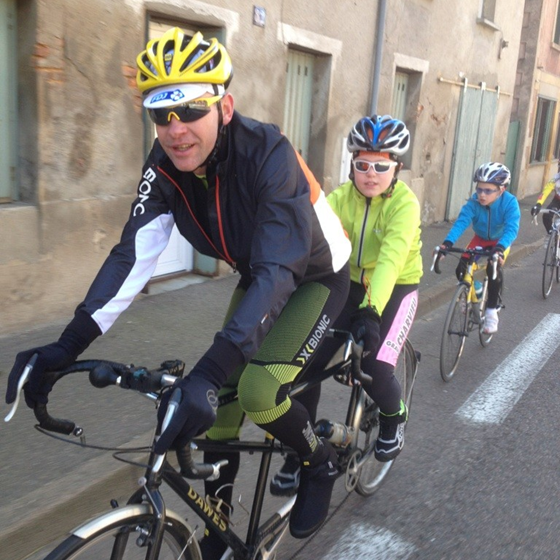
Mattéo… You started out riding a tandem bike… What did you feel with all those stimuli: the wind, the noise, the movement?
The first time I tried, I was scared, I didn’t really trust it. But once I’d done a loop on the tandem, I said I actually wanted to try again.
[Frédéric adds:] At the beginning, he was terrified, and so was I. Where we live it’s very hilly, with climbs and descents. On the descents, I would lean to the right and he’d try to straighten the bike to the left, so it was quite dangerous. The first time he got on it, he was crying. It took about 10 km, and after 10 km, it clicked.
Frédéric… You prepared Mattéo for his first major sporting challenge, the Los Angeles Marathon, at 16 years old. What was the hardest moment of that first learning process? That moment when you thought, “maybe I was wrong”?
Honestly, I never thought I’d made a mistake by entering him in the Los Angeles Marathon. I’d given him a solid preparation, and he did suffer a bit because there was quite a lot of intensity training. But the goal wasn’t really the time. it was for him to finish and to see that he could do the same things as able-bodied athletes. I hoped that marathon would be a trigger for him.
He ran 3h29 and crossed the finish line not tired at all, without even sore legs. That afternoon, we went back out and walked almost 10 km through the streets of Los Angeles to visit the city. It was extremely positive. Right away, it showed him what he was capable of, and it reassured him. I think all the barriers fell after that.
For autistic people, I think giving them challenges that seem unreachable is what can really lift them up, rather than locking them into a life that’s already fully structured. They can even outperform able-bodied athletes. I think this is a concept that should be used more to help some autistic people break out of their bubble.
Mattéo… From not being able to take one hand off the handlebars to drink, to finishing an Ironman… How did that process unfold? What was the hardest thing to learn?
The hardest part was maybe in my head, not crashing into something. I was a bit afraid, especially on the descents.
[Frédéric adds:] We really had to take everything step by step. First, learning how to move from the drops to the brake hoods while climbing. Then letting go with one hand to grab food or a bottle, using a triathlon cockpit. It was tough at the beginning.
As a former cyclist, I had an old Cinelli Spinaci handlebars, the ones Chiappucci and Pantani used, so I put that on his bike. He started with his hands fairly close, then we moved them further forward, and eventually switched to a full triathlon cockpit. It was a process that took several years. At the beginning, it was far from a given; even running downhill on foot, I was faster than him on the bike.
Frédéric… Can you give us concrete examples of specific tools or routines you developed to keep Mattéo focused and reduce his fears?
We worked a lot with a power meter on the bike because he needs reference points. Without them, he can’t manage changes in pace. If the road is flat for a long time and something else catches his attention, he’ll slow down; then maybe 15 km later he’ll think, damn, I have to speed up. With the power meter, we give him very precise ranges to hold on certain sections.
In swimming, he uses Form goggles where he can see his pace, time, and distance displayed. In running, he uses a Polar watch to pace himself. We had to set all this up with very clear references for each discipline.
To help him progress, we broke down every movement. Switching hand positions, riding with one hand for 5 seconds, then 10 seconds. Learning to ride out of the saddle, to accelerate, shift gears, brake at the same time. Everything was broken down over the years to bring him where he is today.
Mattéo… You went from running 3h29 in Los Angeles in 2018 to 2h41 at the Paris Marathon in 2024. With that progression, did you feel something big was coming, or were you living day by day?
I broke down barriers. I’ve progressed a lot in my races, little by little. I keep breaking my times, and with that I’ve progressed a lot overall.
[Frédéric adds:] We also used Supersapiens glucose sensors for race nutrition. He could see when his glucose dropped below a certain level and knew he had to eat. Now he eats glucose every 40 minutes. Everything is fine-tuned. Without that, he could easily go three hours without eating.
At the London Marathon this year, his plan was to run under 2h35, but he went out way too fast. I was shouting at him to slow down, but he didn’t listen and passed halfway in 1h16. He finished in 2h42. He cracked, but not too badly. The long-term goal is to go under 2h30 one day.
Frédéric… Mattéo competes in both adapted and non-para events. How have you managed that, both sportingly and on a human level?
Actually, adapted competitions don’t really exist in triathlon; at least not in France. Most of the time, he races with able-bodied athletes. The only exception is the French Paratriathlon Championships, which he’s now won three times in a row.
On Ironman, at first I entered him as a para athlete, by invitation. But once the race is over, para athletes are removed from the rankings. Given his performances, that wasn’t interesting. Since 2024, we’ve entered him in age groups with able-bodied athletes so he can try to qualify for World Championships and stay in the rankings.
The problem, when Mattéo is registered as an able-bodied athlete in Ironman, is that he is not allowed support in the bike park. Yet he needs markers and help to find his bike and prepare his gear on race morning, especially with the noise and chaos around. Some officials allow assistance, others don’t, which complicates his learning and safety. Ironman should reconsider this rule, especially since other cases allow help. Even though he performs very well with able-bodied athletes, Mattéo is different.
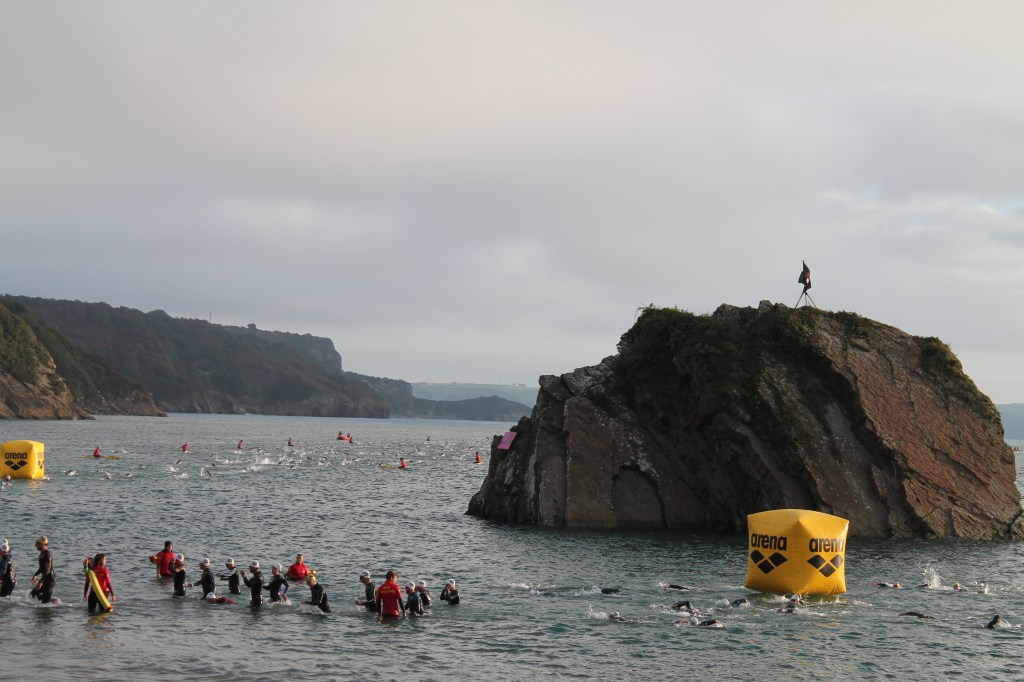
Mattéo… In 2023, you became French Paratriathlon Champion in the PTS7 category, a title you retained in 2024 and 2025. What do these national titles mean to you?
For me, it’s a huge honor. It feels good to receive a title. But I also think it can give hope to people like me, with disabilities, to show them that they can also push beyond their limits. For me, it’s pure happiness.
Frédéric… In 2024, your son became the first person with a disability to qualify for and compete in an IRONMAN 70.3 World Championship in Taupō, New Zealand. How did you experience that achievement in a non-para race?
It was totally a surprise because it was the first triathlon he was going to do without me as his para-sport guide. When he qualified at the Ironman 70.3 in Aix-en-Provence, he had never done a triathlon alone, so it wasn’t even planned that he would qualify. It was mainly to discover what he could do on his own. He raced really well, he took twelfth place in the 18-24 age group and as a bonus, he managed to get his qualification. It was all bonus.
It was maybe also, after Los Angeles, a second milestone where he told himself “it can work if I take it really seriously”. Until that moment, he was training seriously but I think he hadn’t realized all the potential he could have. Since his qualification, I think he really became aware that he could play a leading role in big triathlons.
The only thing I regret is that it’s not enough publicized for partners. With this achievement, there were plenty of people who told us “sponsors are going to be interested”. But despite all these good results, nothing moves.
Fortunately, local companies help us to maintain a solid competition calendar, and big brands like Felt support us with equipment, but we lost our running sponsor for 2026 because Mattéo doesn’t fit the Paralympic athlete category. It’s a shame because he remains a unique case, conveying a positive and hopeful image. Without his disability, he might be competing with the professionals. I often say he’s the Sam Laidlow of para-sport. So we keep our fingers crossed.
Mattéo… In 2025, you went even further by winning your age group at IRONMAN South Africa, qualifying for the IRONMAN World Championship in Nice. That race, however, was difficult. What happened, and what did you learn?
The race in South Africa went really well. In Nice, what slowed me down on the bike was seeing someone crash into a wall on a descent. I panicked and slowed down on the descents. I managed the first half marathon well, but I cracked in the second half.
[Frédéric adds:] The swim went very well. On the bike, he moved up to 26th place before the final descent. After seeing the crash, he lost more than 15 minutes and consequently, I believe, he also forgot to take the last feed before transition. In the run, he missed a fueling point as well and ended up hypoglycemic. Until halfway, he was moving up the field, aiming for the top 20, but after that he really suffered and finished 31st in his age group.

Mattéo at the finish line of IRONMAN WC (Nice 2025)
Frédéric… Mattéo earned his CAP, BEP, and vocational BAC in landscaping, and passed his driving test on the first attempt. Eleven years ago, this seemed unimaginable. How has the autistic community reacted to your story?
We don’t get much feedback. The association AFG Autisme has supported us for two years and helped fund our trip to Taupō when other support fell through. Mattéo even wears the logo of AFG Autisme on his race suit to thank them. They follow him closely and think what he’s doing is amazing.
Beyond that, there’s not much interest from other autism organizations. I’m the first to be surprised that there aren’t people who want to use his image to say “autistic people are not just individuals locked in a room, in another world; they are capable of great things”.
AFG Autisme has been there for us, especially financially, and they believe Mattéo’s story deserves more visibility.
Mattéo… Today, you give interviews, interact with the media, and reach out to people. How has sport changed your relationship with the outside world?
Sport completely changed me. Before, I had no confidence, lots of doubts. Sport helped me so much. It transformed me. Thanks to it, I have confidence now, and I go towards people. Even if it’s not always easy for me to find the right words.
Frédéric… What are your biggest fears and hopes for Mattéo’s future?
My biggest fear during races is the bike leg. I’m constantly checking the Ironman app. If the tracker stops, even if it’s a bug, I panic. I feel relieved once he gets off the bike because I’m always afraid of a crash or a mechanical problem that he won’t know how to fix.
For the future, my biggest fear is not finding sponsors to support him financially, so he can race in the biggest events in the world. I think he still has a huge margin for improvement. The only thing that could stop him prematurely would be if we can’t find sponsors and the finances don’t follow. I have just a regular salary, so it’s impossible for me to manage it alone, especially since Mattéo also has a little sister.
Everything costs double (travel, bikes, …) because he can’t travel alone. My hope is that he qualifies for Ironman WC Kona in 2026, his last year in 18–24, and one day competes in the Paralympic Games if that category (PTS7) is created. Above all, I want this to last as long as possible, because he loves it and has truly found himself in triathlon.
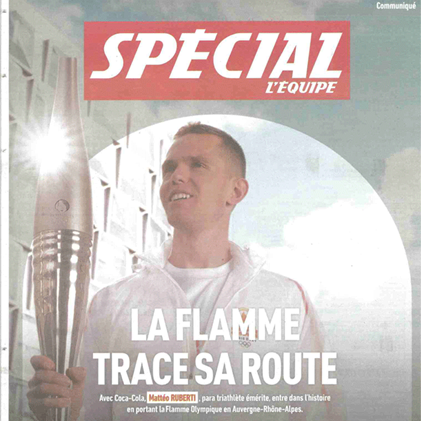
Mattéo… What dreams do you still have as an athlete? How do the Paralympic Games and non-para competitions fit into your vision of the future?
My dream, like my dad said, is to take part in the Paralympic Games. I hope triathlon will be recognized with a specific Paralympic category.
[Frédéric adds:] Alongside triathlon, he also wants to complete the six World Marathon Majors. We’ve tried for Tokyo for years without success. Tokyo is the one he’s missing. Now Sydney has been added too. And maybe one day, going under 2h30.
Frédéric and Mattéo… From these 11 years as Team Ruberti, if you had to choose one moment, one place, one image, what would it be?
[Mattéo:] The first tandem ride. That’s what launched my sporting life.
[Frédéric:] For me, it was this year on the podium in Ironman South Africa, when he received his trophy. I saw how happy he was. It was a huge moment of recognition.
Next interview:
Sam Askey-Doran (Australia)

 the141mile.com
Leave a comment