Interview: Viktoria Brown
Born in Budapest in 1975, Viktoria is nowadays a reference within the ultrarunning community. She started rather late in sports, at the age of forty, but in the last decade she has already participated in Ironman World Championships, Ultraman triathlon and multiple ultrarunning races, from backyard to road and trail events. Despite being 7-times World Champion in 48h and 6-day races, current National and former World Record holder, she has the proper tough and resilient mentality of the ultrarunner, who is aiming to keep going to achieve and conquer new challenges of this kind.
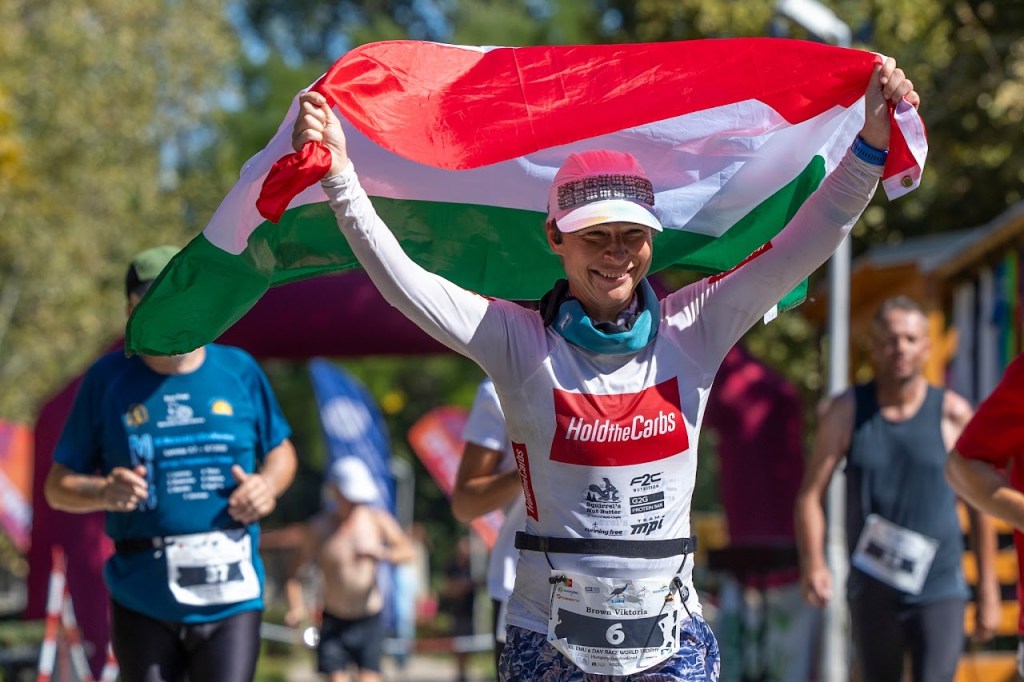
You are Hungarian and Canadian. Big contrasts there, isn’t it?
Yes, very big. There are certain things I like better here in Canada and certain things I like better there in Hungary. Somehow it is never perfect.
When I am there, I miss the things from here, and when I am here, I miss the things from there.
You started rather late in sports, at the age of 40. Thus, the “side B” of your life may be playing quite different songs compared to “side A”. Or are there similarities still?
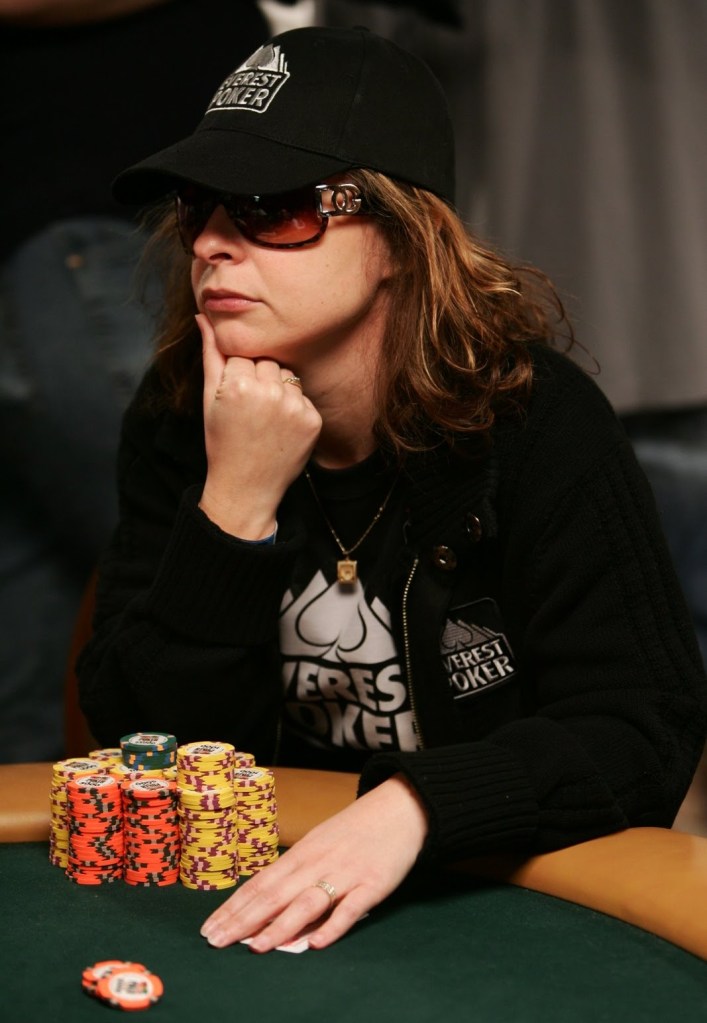
I have had more than just a side A and side B, because I have gone through a few different careers. I was a journalist first, then when I was made redundant, I played poker professionally, and later I moved into business. So there are definitely more than two sides. But for the past ten years, I have been running and doing triathlons, which is very different from before. It started as a hobby, as it does for most people who begin late, but I got more and more serious about triathlon and Ironman.
But yes, there are also similarities between my past careers and what I do now. In journalism, poker, and sport, you need to ask the right questions — that is how you get to the right answers and improve. And there is always this never-ending quest to get better. At the BBC, my English was not perfect, so I had to keep learning. With poker, there was no school, so I learned by talking to people. It is the same in sport: constant learning, always trying to improve.
You mention journalism and world-class poker playing as your jobs in the past. Now, professionally speaking, are you fully related to sports field?
I have athletes who I coach, as well as I also coach myself. Interestingly, when I was playing poker, I was also coaching poker. Now, for the past three years, I have been coaching athletes. I do not take on too many, usually keeping it at around ten, maximum twelve altogether. I have found that is a sweet spot where I still have enough time for my training and my family and everything else in my life.
On the other hand, I am also building a new business that is related to running and coaching. Fingers crossed, that will be ready in a few months to at least start the testing of the website.
What was the trigger point to start doing sports?
At the very beginning, it was just about weight loss. When I had my first child, I was able to lose the weight just by following a diet. But after my second child, I became pregnant a bit earlier with my third, so I did not have time to lose the weight after the second child. After the third, I had even more weight, and at that point, I was approaching forty. The diet alone was not enough, so I had to start moving.
But the competitive spirit was somehow inside you, since you started racing in different events…
The competitive spirit only started kicking in once I realized that I could actually compete. When you are in the back or middle of the pack, you are mostly competing with yourself. At first, I was just trying to improve my times and beat my previous bests. The first time I realized that I could be good was during my first Ironman in 2017 (Maryland). I knew how little training I had done — the longest bike ride I had completed was 135 km —, I only rode once a week, and I barely swam twice a week during the whole training period. Despite that minimal preparation, I performed well, and that was the spark for my competitive spirit.
Afterwards, I started achieving more. I won my age group in an Ironman (Waco, 2021) and started reaching podiums in smaller events, like 5k races and the North American Masters Athletics Championships, where I won in 2019 the 10000m race and placed third in the 5000m, in my age groups. In 2020, before my first ultra-running race, I won the National Championship for the Ironman distance in Hungary — overall female title. These experiences showed me that I could compete seriously and encouraged me to aim even higher.
Today, I am a seven-time World Champion in events such as 48h and 6-day running. I enjoy being competitive and being on the podium. Next month I will compete in the 24h World Championships, which is a very strong field; a top 10 would be excellent because it is still a bit too short event for my capabilities. In the end, the ultra-endurance events suit my skillset better than shorter, speed-focused races.
And among all those, there was a race that changed the whole perspective of your sporting career…
During COVID pandemic, the events were not cancelled in Hungary, so I went and won the National Championship for the Ironman distance overall, not just my age group. The field was not very strong, and I completed the race in ten and a half hours. Still, winning a national championship as a female was a big deal for me.
And then the real turning point was my first 24h race. Those two races, which were actually very close to each other. The National Championship I won was in August 2020, and the 24h race followed in September 2020. Winning both of these events in such a short span showed me that I was not just okay, I was actually really good. The triathlon championship began to change the way I looked at my abilities, but the 24h race was a true eye opener.
Through that race, I discovered something important about myself. In triathlon, I was working hard, and although I had some natural talent on the bike, I did not have the speed for the run or a high output on the bike. My strength has always been sustaining a high percentage of my top capacity for a long time, which allows me to catch up to the field. The 24h race showed me that this talent, combined with endurance, could make me competitive at a completely different level, not just through hard work.
You have been participating in long distance triathlons and ultra running races mainly. That is a physical challenge to your body. How do you manage to mix and combine them?
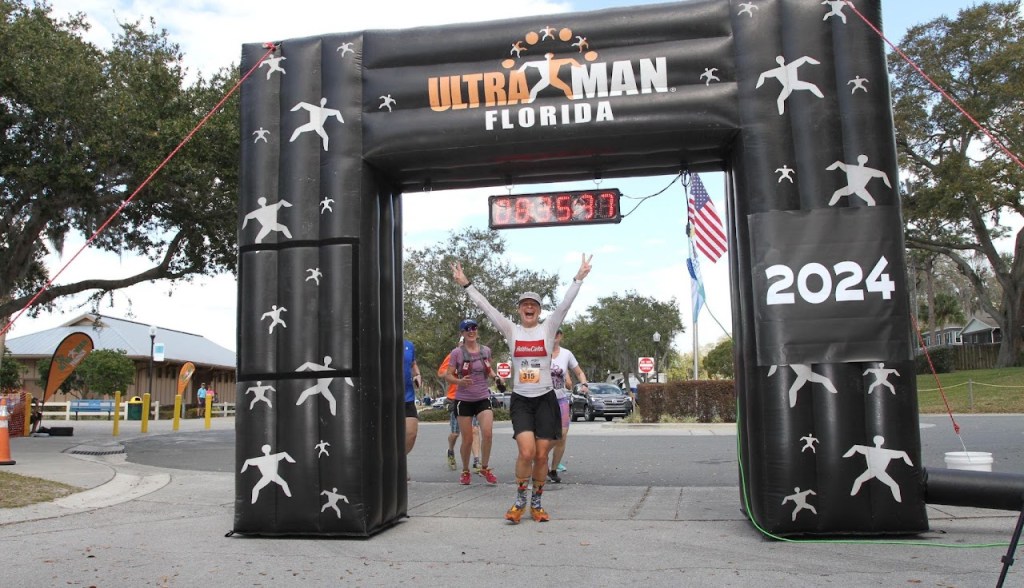
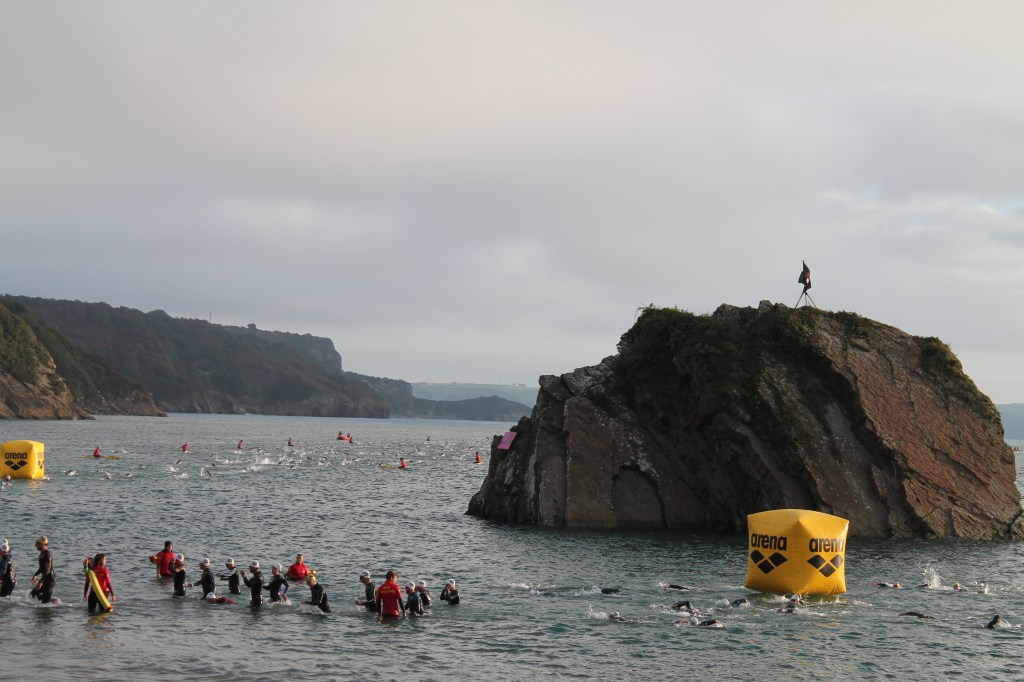
It was hard to combine both. When I won that championship in 2020, I faced a big dilemma: should I stop doing triathlons and focus solely on ultra running? I knew that potentially I could be better at ultra running if I devoted all my energy to it. For the following four years, I trained for both triathlon and running, until the Ultraman Florida last year. Since then, I have not been swimming and have only used biking for cross training, so I have not done a triathlon for the past year and a half.
Still, I do plan to return to Kona for the World Championship and compete in Ironman in the future, possibly in my sixties or seventies. I met there in Kona 2022 the oldest female finisher, who was seventy-eight. That inspired me and planted the idea of maybe becoming the oldest ever female finisher one day. Of course, it is easy to think about when you are fifty, but we will see. I do not imagine doing ultra races in my seventies on mountains or in uncontrolled environments. For fun, I think I will stick to Ironman events and maybe shorter trail ultras.
Events like a regular marathon (42k) or a triathlon are still not within the ultra-distance concept. What is the gap?
There is a certain distance or time frame that you can still approach with almost the same mindset as a marathon or Ironman. I feel that 24h or 100 miles ultras fits that category. When I did my first 24h race, I approached it like a marathon — I had not done shorter ultras before —, taking my drinks and gels and not stopping, just going, at a slower pace. My mindset was simply to see if it was possible to do the same as a marathon, but four times as long, and it worked.
Multiple-day events or ultra races in the mountains are different. A race like a hundred-mile UTMB would require pacing differently, managing food intake carefully, and would take much longer, even for top females who finish in over 24 hours.
In the same line, ultrarunning and trial running are not necessarily the same thing. What are your experiences from both?
Ultra running and trail running are not just about spending a long time running; the logistics make a big difference. In the mountains, you need warm clothes and have to stop to take care of yourself. Anything over 48 hours is different, because you have to count sleep time in. For example, in the Cocodona 2026, a 400 km race, I will be eating real food while still getting calories from drinks, and I will make sure I have the right gear at each station. It is a bit more relaxed compared to a looped race, where you have to maintain the same pace and complete each lap in the same time repeatedly.
In road ultras everything has to be more precise. They require much more discipline. In timed races you are often running short loops repeatedly, which is mentally very challenging. Trail running, on the other hand, involves varying terrain — going up and down hills, adjusting to different surfaces — and you are moving from one place to another, which feels mentally easier and more fun. These days, I enjoy trail running much more.
Looking to the type of events you participate in, together with your passion for orienteering/regaining, running is probably your favourite over cycling and swimming, right?
Running is my favourite, yes, but, although I am better at road cycling, I am also trying to learn mountain biking because I have done several adventure races. I am not very skilled at it, and I do not have much time to perfect it, but I am trying.
Despite these days I prefer trail running, another format I really enjoy is the backyard ultra. It is a middle ground between trail and loop (track) racing, usually on flat courses with a one-hour loop of about 6.7 km. I have been on Team Canada for the past few years, and I plan to try again next year. There is also an individual championship, which is extremely competitive because there is no differentiation between men and women — only the best twenty-five in the world qualify. It is a big challenge, and I am not sure I can make it, but I might try just to see.
You have become 7 times World Champion in GOMU – Global Organization for Multi-Day Ultramarathoners. Congratulations for that impressive achievement. What is the essence of these GOMU events?
Everything from 48 hours and above belongs to GOMU. I am the vice president of this organization, and we created it because there was no other ultrarunning body taking care of these disciplines. Before GOMU started running the World Championships in 2022, there were no championships for these events. Now records are falling because the best athletes are finally racing each other. I feel that is huge, and I am very happy that I could do something to help the sport, bring athletes together, and give them recognition.
Other than organizing World Championships, we also keep all the records so that people know what to chase. And the third thing is rules. Many existing ones are made for marathons or track races and just do not fit multi-day ultrarunning. For example, the rule that a man and a woman cannot run together is irrelevant when you are running for days and just want to talk to someone. The World Athletics shoe rules are another example — most of the shoes ultrarunners prefer are not even on the approved list.
So GOMU has three main purposes: running the World Championships, keeping the records, and adapting the rules to make them fair and practical for our sport.
In GOMU you have all kind of competitions from 48 hours to 5000 km. How do they compare in terms of preparation on racing strategies?
In terms of mileage, there is a point where your body just cannot handle more training, regardless of the race distance. If your body can handle 200 km a week, that is the cap. That is where biking comes in, since you can still add cardio volume without extra pounding.
The biggest difference in very long races, like the 5000 km race, is that speed is the least of your concerns — you are running for a month and a half. In those events, you basically just stop to eat and sleep, then get back to running. For example, in the Sri Chinmoy 3100 miles race, the course is closed from midnight to 6 a.m., so you are forced to rest.
I think up to about 48 hours, maybe 60, you can still force yourself through without sleep. But beyond that, sleep has to come into play. Even in the 6-day races, you need some intensity in training to maintain leg speed, because the bottleneck is how much speed you can sustain when you are extremely tired. From about 10 days onward, the strategy becomes more sustainable: usually around 4 hours of sleep a night, eating on the go, wasting no time, and just moving as much as possible.
These races are all about physical and mental toughness. In which races did you most see both your limits?
For me, definitely the 6-day races. The result is one thing, but I have never had one where I was satisfied with how I handled it — the way I managed the second half. I always seemed to fall apart around day four. I got better with time, and my second-to-last was my personal best, but even then I was not happy with how I held up in the later days.
It is the combination of extreme sleep deprivation and the need to keep daily mileage high. In those races you are sleeping maybe one to three hours a day — I do not even sleep the first night. If I did another 6-day now, I would probably do 90 minutes of sleep twice a day. But you cannot slow the pace too much, because you still need to hit around 130 km every single day for a world class performance. That is what I managed most days in my best race, and it is brutally hard.
Beyond several National Records you even set a World Record (72h), what means the best ever on something, period. What is the feeling of that?
It was good. It was great. I was chasing it and it took me a few tries, so when I finally set the 72h World Record it was great. But I was also so close to 300 miles — I reached 292 — that I immediately felt I wanted to go back and chase that round number. It is a bit like what Alexander Sorokin must feel. He holds the 24h World Record with 198 miles, but being just shy of 200 makes you want to try again.
That is the nature of records. It feels amazing in the moment, but you immediately start thinking about the next challenge. It is not like the Olympics, where you dedicate four years and then stop. With ultrarunning records, once you hit one, there are always two or three more waiting.
Some of these events sound more like adventures rather than competitions. Actually, you have recently participated in the mystical Barkley Fall Classic 50k, the little brother of the “secret” Big Barkley. How is the process to get yourself to the starting line?
The Barkley Fall Classic was created so runners can experience something similar to the Big Barkley, but with more participants. There are over 400 starters. It is invitation-only, but anyone can put their name in — no formal application is required. It takes place in the same park, designed as one loop of the Big Barkley course. That is five loops instead, sometimes in reverse, with a time limit of 12 hours per loop, making it a 60h event if you attempt all five.
Some of the signature rules are kept as well. You cannot wear a GPS watch, and the course map cannot be published or shared online. The organizer, Lazarus Lake, still lights a cigarette to start the race. You go up the same mountains, including the infamous “Rat Jaw” which is just a hill off the trail, but has become a defining feature of the event.
And then, within the race, how does this Barkley Fall Classic challenge look like?
You encounter along the way these briars with a lot of thorns, which cut you up unless you are very far at the back where people have already made a path. But if you want to make the cutoffs, you have to be out there bushwhacking and pushing through these briars, which are taller than me. My knees got badly scratched between my shorts and my long socks, and it was 32 °C, so sweat was dripping into the wounds, which made them sting badly. I am used to pain in long events, but this was different. I found that even a thin white sleeve on my arms prevented pain from cuts, so next time I will wear three-quarter orienteering pants.
Besides the many cutoffs along the way, you come to reach what they call the “decision point”, where Lazarus Lake is sitting. You have to decide: either go to the finish line straight — only about a hundred meters away — or go for the 50k, which sends you back up Rat Jaw to the fire tower, then two more brutal climbs on the other side and all the way back. Only two women and 20 people out of 400 completed the 50k, though I believe the distance is more like 60k. I was the third woman at the decision point, but I chose the marathon finish because I did not have enough time to finish the 50k. And I was quite happy with that decision, because the last person who finished was a girl who made the decision point 20 minutes before me; nobody else behind me made it.
There is always something else, a bigger achievement to be done. What other adventures come to mind for the future?
For me, Cocodona ultra is definitely one. I have been thinking about it for years and finally made the leap for 2026, so that is a big one. I also really want to do better in the Backyard Ultra — my best so far is 49 hours, but I believe I can go further. Next year I am looking at TDS (les Traces des Ducs de Savoie), which is part of the UTMB week and runs on a similar course. The UTMB itself excites me too, and I am experimenting with this kind of races to see if they suit me. Other long ones that catch my attention are Tor des Géants — about 320 km in the Alps —, similar to Cocodona in length and adventure.
Beyond ultrarunning, I am intrigued by adventure racing. It is usually five to seven days, a team of four, with disciplines like orienteering, mountain biking, paddling, and portage. Sometimes they add things like rock climbing or horseback riding. It is a huge team effort, a true adventure, and there are World Championships. I tried a 30h event, which gave me a taste of it — although paddling for 9 hours straight was not that much fun.
It is also very expensive, with entry fees of several thousand dollars per person. So I am not yet sure if I want to fully commit, but it sparks my curiosity and maybe I will start building toward it in the future.
Next interview:
Pierangela Dezerega Trautmann (Chile)
 the141mile.com
Leave a comment