Interview: Camille King
Born in Paris in 1977, Camille is, and has always been, an enthusiast about sports and outdoors. From rock-climbing to all kind of endurance activities, she is connected to sports not only as a hobby but also professionally. She is endurance coach and personal trainer at www.dare2dreamfitness.co.uk, as well as has acted as sports model. Many iconic races and sport events have been part of Camille’s career, and many more adventures to come, due to her character and personality, where there is always room to explore new challenges and overcome limits, day by day.
Triathlon, trail, ultra-running, swimming, rock-climbing, … It is clear that sports is your life, but which of all those you started with?
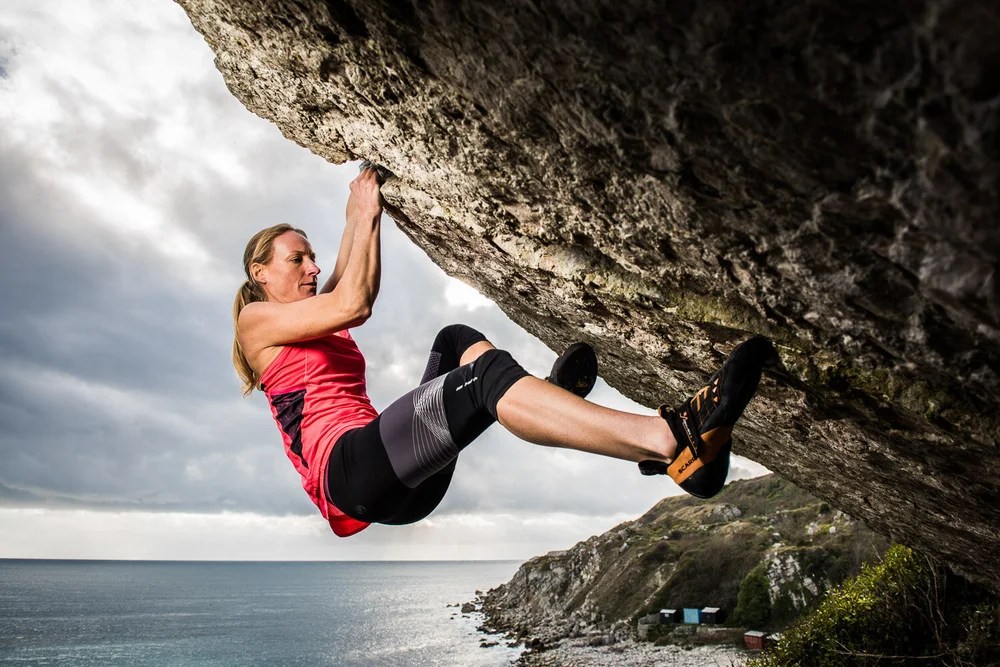
I grew up in France, so I am actually French although I live in the UK now. My parents were rock-climbers and mountaineers. So even though I spent my weekdays in the city of Paris, my weekends were spent at my grandparents’ house in the country side, where I did a lot of rock-climbing when I was little.
Climbing is a big passion of mine. It is a sport in the outside where I think I thrive the most. The outdoors is a big playground for me. And basically I have climbed since I could walk pretty much and I still climb. Now I am doing the triathlon season, but yeah, every time I can I climb. That is probably my go-to sport.
Probably rock-climbing is the most different sport from the others, right?
Yes, and it is great to cross train actually, because it is so different… It utilises more upper body. So if I run or if I cycle, I can climb afterwards on the same day and that is okay.
Oppositely, if I swim on the same day, which I often do first thing, it is okay, but I can feel it in my arms. So in that sense there is an impact there.
Indeed, tired muscles from endurance training and the technical difficulty of rock-climbing. How do you manage?
I rock-climb in the evening because there is a local climbing centre and it only opens afternoon and evening. Whereas I swim at the pool early morning. So that way I can manage doing both sports and minimising the impact.
On the other hand, rock-climbing and endurance events have slightly different seasons. Rock-climbing competitions are more in the winter, while I am training mainly in zone 2 and doing more base work for triathlon. At that stage I am pushing myself more at climbing. However in the spring and summer, I am more focused on triathlon competitions, and I just climb a bit for fun, and I do not pay too much attention to my climbing grades.
In the end I cannot sustain the same volume of training in climbing and triathlon at the same time; it just does not work for me.
So, the big question comes… Are you a better rock-climber or a long-distance triathlete? (or any other…)
I am not sure…
I have a lot of experience in rock-climbing because I have climbed pretty much my whole life, since I was like a toddler, whereas in triathlon I started quite late, in 2016. However I have been running for a good number of years, maybe 20 years or so, and I did marathons, trails and ultra running… but triathlon is definitively newer to me, even though I feel I have done quite well in my age group. I just do not have the experience I have in climbing.
ITU Championships, Ironman Kona WC, UTMB, major marathons, and long etc. You have been in many iconic races. What do you consider your best accomplishment to date?
It is a good question… When I started triathlon, what I wanted to do was get to Kona. I had one main focus. I also had no idea how hard it was. I saw the Ironman in Hawaii on TV and one of my friends told me about it and I was like, oh yeah, that sounds great… Let’s get to Hawaii!! But I did not even own a bike or anything.
That became my goal straight away. I was not interested in shorter distance events, I just wanted to get to Hawaii. So it took me a year to qualify which is not that long… I did a sprint, standard, middle, Ironman, you know. And the first time I was in Kona I actually had an incredible race and I did really, really well for me. So that was amazing because it was truly like the dream.
Once you get to the Big Island and finish the race at Hawaii, some athletes experience a bit of void in their sporting career…, but you managed to come back. Do you feel attracted to go back to the island recurrently?
Actually not so much. I feel like I have ticked that box. It is such a long way and it is so expensive to go… and I think there is so many other events. I am not saying never because never say never but at the moment it is not within my objectives to go back. I feel I have taken it and there is so many other things to do.
I am super thankful to have been there twice. The second time I went as part of the Zwift Academy, who helped us get there. So I am super grateful for the whole opportunity but I am not sure if I would go back, at least not in the short term.
You have been in Kona IM WC twice, and in multiple ITU Championships. How do you compare these two main events for long-distance triathlon?
Both are iconic in their own ways because you have to qualify to get there. Whether it is the ITU Champs (at least for Team GB) or Kona WC, that is the main difference to me to other events. So in a way, it is more meaningful because you got to fight to get there, not everyone has opportunity to race there. Still, it is more difficult to qualify for Kona, since the competitive environment is bigger. You may need to be first in your age group to qualify.
Also these bigger events have more spectators, it is more crowds supporting and they kind of spurs you on, what I quite like. Roads are closed to traffic as well, so I feel it is a lot safer. I am happy to pay a little bit more to race to benefit from closed roads.
Actually you were part of the Zwift team in your last participation in Hawaii. How did you come to be part of it?
I think it was a combination of a bit of luck and a bit of a grit. I have Zwift, the software, with my turbo trainer at home and because I have three children, it is really convenient. It means I can train once the children are in the house, especially when they were younger. It really revolutionised and helped my training. Also the weather in the UK can be cold and humid and I am a bit of fair weather cyclist.
For the Zwift program, you had to complete a number of workouts on the bike, then a time trial, and also do the same on a treadmill for running. I do not even own a treadmill but one of my clients (from personal training) let me use her treadmill.
And then I was very lucky because I think there were thousands of people who applied and I was within the criteria. For the next step I had to make a video about myself, a bit more of the marketing side of things. And then I attended a zoom meeting and Tim Don was on the call… I thought, well, I do not think he would be wasting his time with talking to many people… and yeah, basically the invited me to join the team, which was amazing. Actually, in that year, it was only four women who got selected for the Zwift team to Kona 2023.
And what does be part of the Zwift Academy mean? What does it entail?
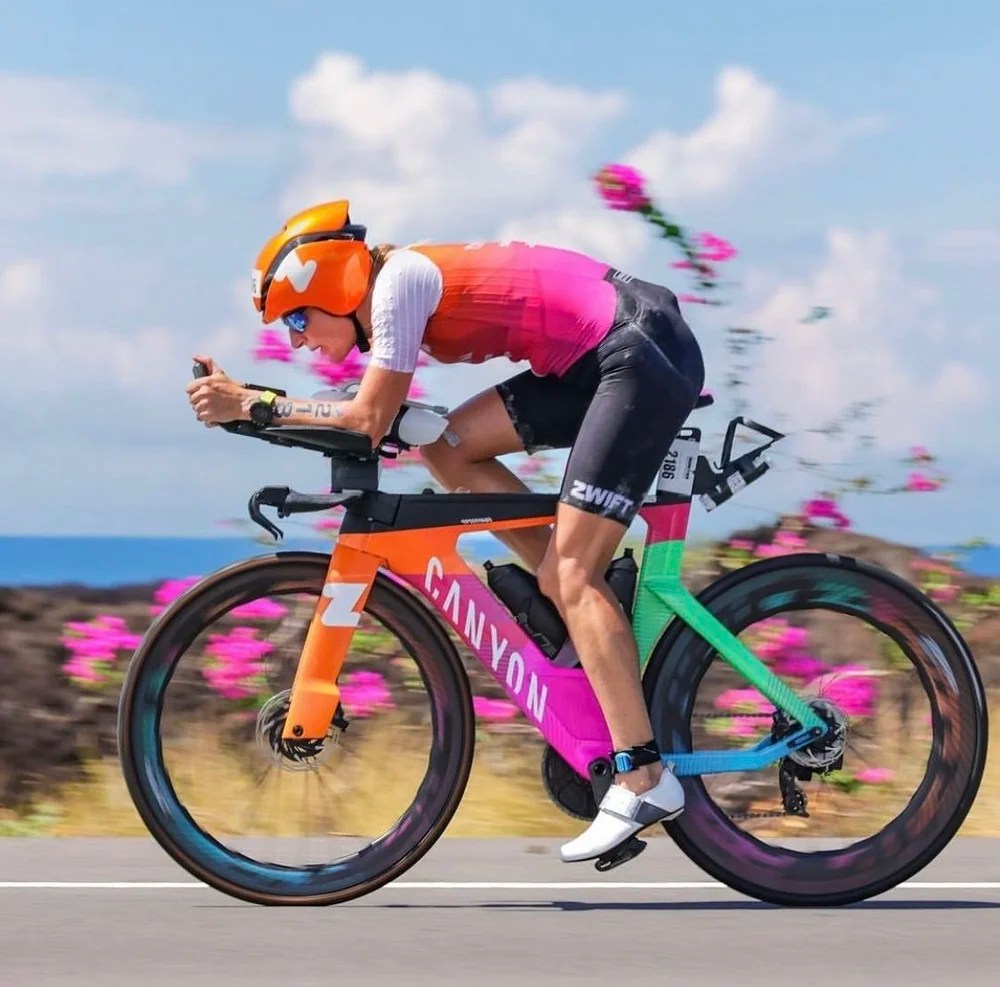
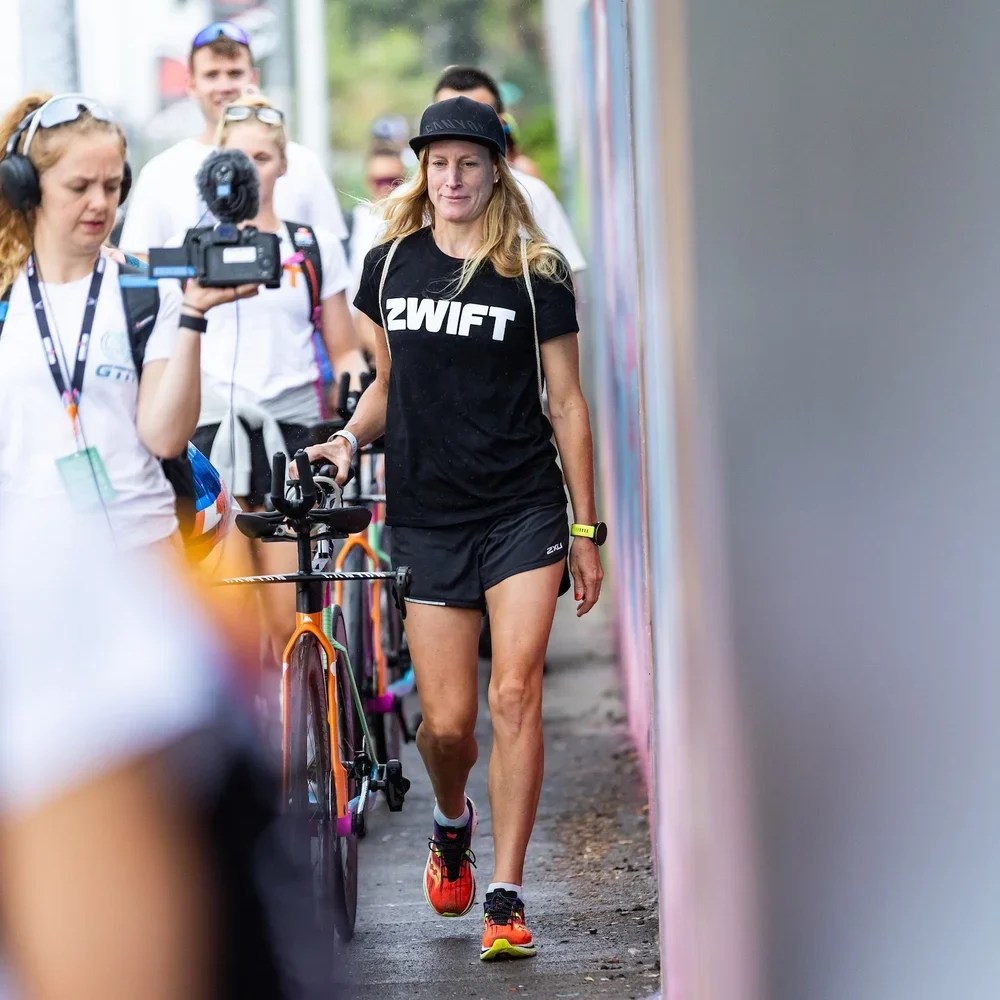
It was an incredible opportunity to partner with a number of contracts with sponsors. I was thankful to have access to top notch triathlon equipment, which I would not have been able to afford on my own. Nutrition, trisuits, components, … I still have the Canyon TT bike and a road bike from the Zwift program. All of that is incredible but for me the biggest benefit was the level of knowledge around us, which to me is invaluable. I have never met so many Olympians… Tim Don was one of the mentors on the team and he ended up coaching me. Sarah True was also part of it.
Our Kona team of 4 girls met in Germany where we went to the Canyon headquarters. Lots of people from Zwift and Canyon and all the different sponsors came there. And then we flew to Austria for a training camp. We were in amazing hands. For me, that is what made it really special.
And then in Kona they provided the accommodation and all kind of facilities. We even had a chef for the 16 of us at the house. We were treated better than some of the pros.
The downside is that almost every day there was some major thing to do, related to media or marketing. It was really busy so when you get to the race you feel you have not stopped, that you have not sat down a little bit, but I am not complaining at all since it was an amazing experience.
Exploring your limits is part of your purpose. Is swimming in UK in winter the closest you have been to those limits?
Not really. It is not just pushing one big limit for me, but it is more testing myself on a day by day basis, in little things. For example, the other day I did an Olympic distance triathlon; nothing special, but I tried my best, and then the next day I turned 48, so I decided to do 48x100s in the pool. And later in the day, since it was my birthday, I went to Lulworth Cove and I swam between coves.
It might happen that today I have a four-hour gap since a client cancelled, so maybe I will go and see if I can do 100 km, whatever it is. So they are not big PRs, big performances or anything like that, but the things which challenge me, every day.
And if we talk about a particular event, what is the toughest one you have participated in?
I did an ultra running race in France a long time ago; L’Échappée Belle, in 2016.
I think it took me 10 or 12 hours, something like that. It was up and down the mountains at altitude with big elevation gains and it happened to be during a heatwave, so very hot. And there was also a heavy storm. And you are on your own in the mountains, lightning and all of that, so that was probably the most challenging I have had to do. Because of the weather, the distance, a lot of elevation gain and the altitude as well, since I live at sea level here in Southampton.
With regards to special events, you recently participated in the Ötillö SwimRun, a famous endurance event across +20 islands in Sweden. How was that experience?
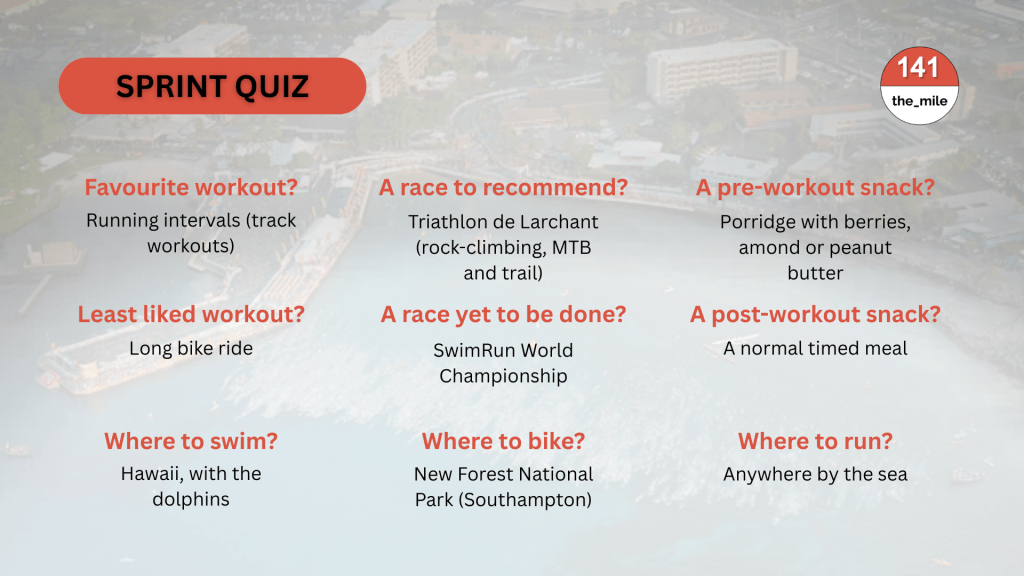
I highly recommend it. It was so much fun and I am keen to do another one. It is more like trail running, everyone is going to relax and really friendly, so it is a bit less competitive and serious than triathlon races. And I had never been to Sweden, so it was a great excuse to go.
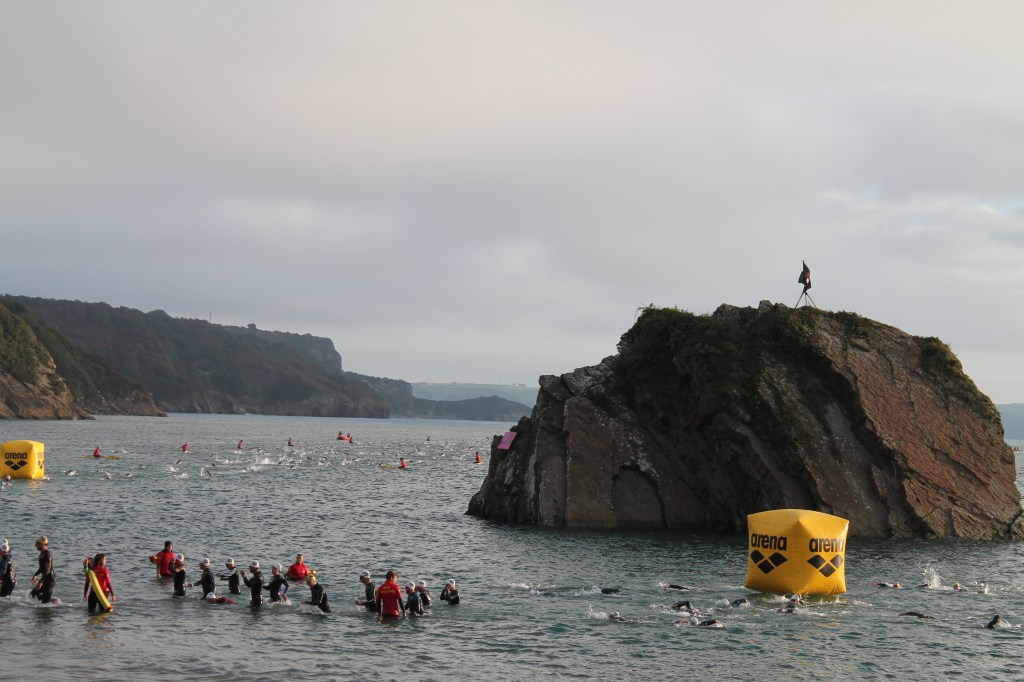
The race was really about the conditions; they were quite rough. The Baltic Sea is really cold, so when you jumped into the water your face kind of froze and I am not good in the cold, I prefer the heat. Also the running part was really technical; a lot more than here where we live, so we could never really push myself and the pace was more like training. You swim with your shoes, and with pull-boy, since you do not really kick; you swim upper body. Because of the shoes in the water I was worried about blisters and swooshing but actually it was absolutely fine.
I think there is a lot to be learned there. The Scandinavians basically dominate the race. They use these massive paddles, what makes them quicker. And I was also quite careful jumping in the sea because I did not know if there would be rocks or others but they just jumped around and straight in. There is also like 40 transitions, in and out of these islands, so if you waste 30 seconds at each…
What challenges are left for you? At least one that you have already drawn in your mind already, for somewhen in the future.
I do not have the real answer to that yet, but I have this kind of dream to maybe cross a country, like the US or Canada, without an engine… By swimming, biking, climbing, kayaking, … you know. That is really on the back of my mind.
It is not about performance but more of a big adventure, in the outside. I have not defined it yet but I do have that desire: travel quite a long way, just doing sport.
Having three kids and doing multisport activities is also part of exploring-your-limits, from time availability perspective, the least. What is the secret?
It is a juggling act… I have my own business about endurance coaching and also personal training so that takes some of my time. But I try to train early mornings and I also often train indoors, especially when the kids were younger, so I could still train with them at home. Or I train while they are at school.
And sometimes I also have to be okay without training. Like during school holidays. The kids are around, so I train less, whenever I can, and it is less structured.
Do you see yourself exploring new sports in the years to come?
I am open to ideas and suggestions, especially if it is something outside. I do not have anything in mind, but if something came up, I am always
happy to try new things.
For example, my oldest son at the moment wants to play tennis. I have been playing tennis with him almost every day during the holidays. He is 16 and much better than I am, but I am happy to run around and try to hit the ball despite me being a beginner.
Next interview:
Viktoria Brown (Hungary/Canada)
 the141mile.com
Leave a comment